Soft Washing vs. Pressure Washing: Which Does Your DFW Home Need?
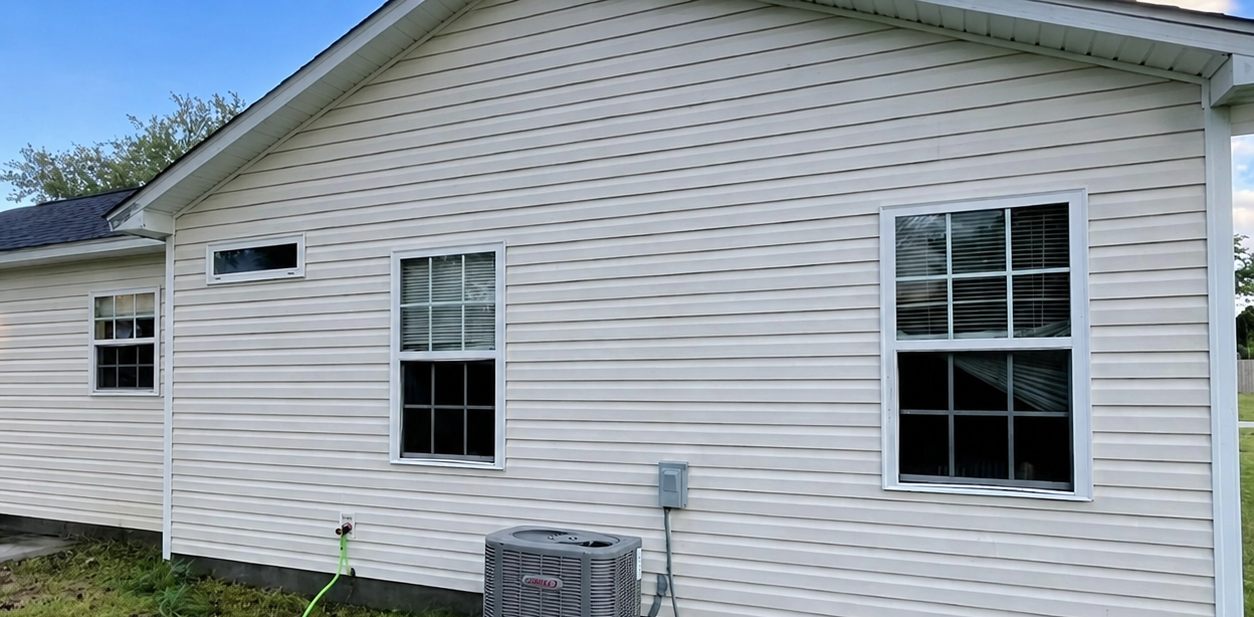
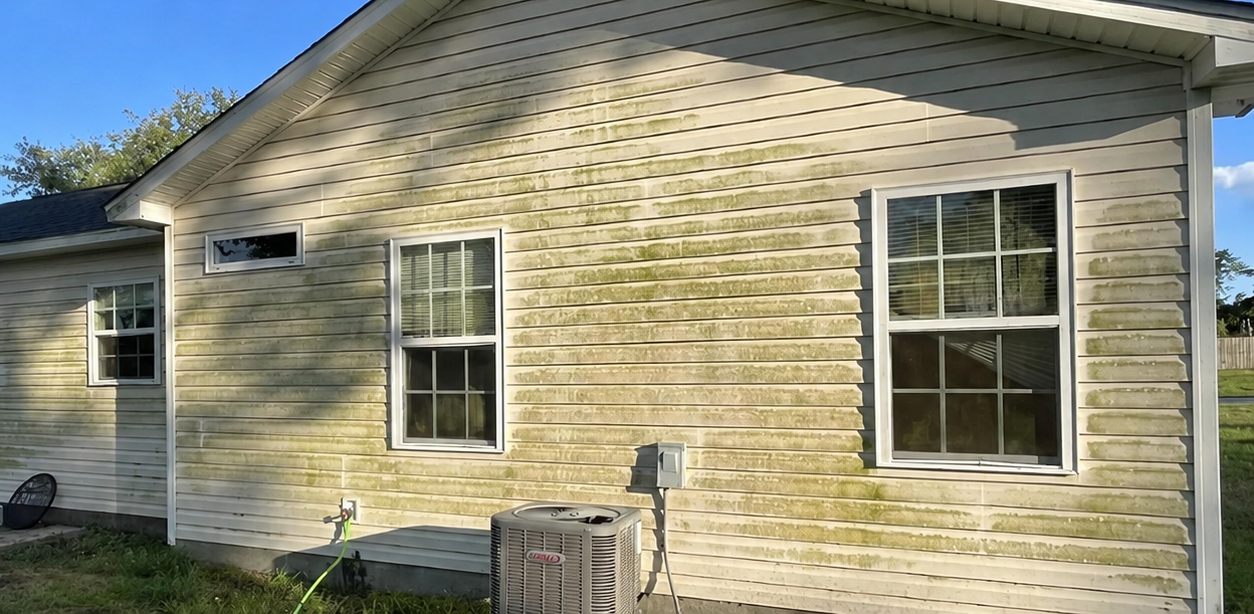
Walk into any Frisco or Plano neighborhood after April pollen season and you'll see it: green-black streaks creeping up north-facing siding, dark mildew under eaves, algae bloom on shaded stucco. Most homeowners assume the fix is straightforward — rent a pressure washer, blast it off. That assumption costs people real money every year.
The reality is that pressure washing and soft washing are two completely different techniques. One uses brute mechanical force. The other uses chemistry. Mixing them up on the wrong surface is how you crack vinyl siding, strip paint off a 1990s Carrollton home, or blow granules off your roof shingles. This guide breaks down what each method actually does, which surfaces need which, and how to protect your Frisco or Lewisville home from costly mistakes.
Quick answer: most DFW homes need both methods — soft washing for siding, roofs, windows, and fencing; pressure washing for driveways, sidewalks, and concrete patios. A whole-property house wash starts at $299, and it's done with the right technique for every surface.
What is soft washing?
Soft washing uses low water pressure — generally under 500 PSI — combined with a biodegradable cleaning solution to break down organic growth. Instead of physically blasting grime off a surface, soft washing dissolves mold, mildew, algae, and biological staining chemically. The solution does the work. The water just rinses it away.
That low pressure matters. Vinyl siding on Frisco homes built after 2015 is engineered to shed water, not withstand 2,000 PSI directed at its seams. Stucco coatings on Plano homes — especially those with an EIFS (synthetic stucco) system — are porous and fragile under high pressure. Painted wood trim, window seals, and roof shingles all fall into the same category. These surfaces need the chemical approach, not a pressure wand.
North Texas makes this especially relevant. Every April and May, oak pollen coats everything in the DFW Metroplex. That pollen, combined with our humid summers and shaded north-facing walls, creates a breeding ground for algae and mildew. By June, homes in Carrollton and Lewisville that back up to tree lines often have visible green or black streaks on their siding. Soft washing breaks down that biological growth at the root without forcing water behind panels or cracking fragile coatings.
The cleaning solutions used in professional soft washing are biodegradable and safe for landscaping when applied correctly. They're mixed to the right concentration for each surface — stronger for concrete, diluted for delicate trim. The rinse water drains safely and doesn't carry harsh chemicals into your flower beds.
What is pressure washing?
Pressure washing uses high-velocity water — typically between 1,500 and 4,000 PSI — to physically blast buildup off hard surfaces. It's mechanical cleaning at its most direct: pointed water pressure dislodges dirt, grime, tire marks, clay stains, and mineral deposits from surfaces that can handle the force.
That's the key phrase: surfaces that can handle it. Concrete driveways, sidewalks, patios, pool decks, and brick pavers are dense, non-porous, and structurally rigid. They're built to bear weight. A pressure washer won't hurt them — it's exactly what they need.
For a Lewisville homeowner with a concrete driveway stained by North Texas red clay, pressure washing is the right call. Same for a Plano patio covered in years of spilled BBQ grease and ground-in dirt. Hard surfaces with stubborn, embedded staining respond best to high-pressure water, especially after a chemical pre-treatment loosens things up first.
The important distinction is that even "pressure washing" on hard surfaces often involves more than just a wand. Professional-grade surface cleaners (the round, spinning-disc attachments) distribute pressure evenly across the surface. That prevents the zebra-stripe pattern that happens when someone walks a wand back and forth across concrete. It also means faster, more consistent results compared to a rental unit from Home Depot.
Which method for which surface?
This is the question every Plano or Frisco homeowner should have answered before cleaning day. The wrong method on the wrong surface doesn't just underperform — it causes damage. Here's the breakdown:
| Surface Type | Recommended Method | Why |
|---|---|---|
| Vinyl siding | Soft wash | High pressure cracks, warps, and separates panels. Water forced behind seams causes hidden moisture damage. |
| Stucco / EIFS | Soft wash | PSI breaks the porous coating. EIFS systems are especially vulnerable — pressure strips the synthetic layer. |
| Brick & stone | Pressure wash OK, soft wash for delicate mortar | Hard brick handles pressure. Aging mortar joints and softer natural stone need the low-pressure approach. |
| Painted wood | Soft wash | Pressure strips paint down to bare wood, requiring repainting. A soft wash cleans without removing the finish. |
| Concrete driveway | Pressure wash | Handles tire marks, clay stains, and mineral deposits. Pre-treatment + surface cleaner gives the best result. |
| Pool deck / pavers | Pressure wash low setting or soft wash | Depends on paver condition and joint sand. Older pavers with loose sand need lower pressure. |
| Roof shingles | Soft wash only — NEVER pressure wash | Pressure blows granules off shingles, voids manufacturer warranties, and shortens roof life by years. |
| Vinyl fencing | Soft wash | Same risks as vinyl siding — cracking, warping, and water intrusion behind panels. |
| Wood fencing | Soft wash | Pressure splinters wood, lifts grain, and accelerates weathering on fence boards. |
| Windows & glass | Soft wash only | High pressure breaks window seals, forces water into frames, and cracks glass. |
Why DFW homes need both methods
Most homes in Plano, Frisco, Lewisville, and Carrollton aren't one material. Your home has vinyl or stucco on the walls, possibly painted wood trim, glass windows, a composite or shingle roof, and a concrete driveway and walkways. Each of those surfaces has different tolerances. That's why the answer isn't "soft wash" or "pressure wash" — it's both, applied to the right areas.
Here's what a typical whole-property cleaning looks like for a North Texas home:
- Siding, soffits, and fascia: Soft wash. Chemical treatment breaks down algae, mildew, and the baked-on film from clay soil splash-back. Low pressure rinses clean.
- Roof: Soft wash only. A low-pressure application of cleaning solution kills algae streaks without damaging shingles.
- Windows and glass: Soft wash rinse. Gentle enough to protect seals and frames while removing hard-water spots and pollen residue.
- Fencing: Soft wash for both vinyl and wood. Preserves the surface while removing biological growth.
- Driveway and sidewalks: Pressure wash. This is where high PSI earns its keep — clay stains, tire marks, mineral deposits, and years of ground-in dirt come clean fast.
- Pool deck and patio pavers: Pressure wash on a lower setting, or soft wash depending on paver age and condition.
North Texas clay soil is a particular nuisance. After rain, red clay splashes up onto the lower two or three feet of siding. Over a season, that creates a fine, baked-on reddish-brown film. Blasting it with high pressure doesn't work well — the clay is bonded to the surface at a microscopic level. A chemical pre-treatment breaks that bond, and a low-pressure rinse lifts it off cleanly. Trying to force it with 2,500 PSI is how you crack the vinyl above it.
Mineral deposits from our hard municipal water are the other common DFW issue. Calcium and lime show up as white or gray streaks on concrete driveways. They need a mild acid pre-treatment to dissolve the mineral bonds, then pressure washing to rinse everything clean. That two-step process — chemistry first, then pressure — is how professional cleaners get results that a simple wand pass can't match.
The dangers of DIY high-pressure on the wrong surface
We see the aftermath regularly. A homeowner in a Frisco subdivision buys or rents a pressure washer — most consumer units run 2,000 to 3,000 PSI with no surface-specific nozzle control — and cleans the whole house with the same setting they used on the driveway. The driveway looks great. The siding doesn't.
Here's what can go wrong:
- Cracked or warped vinyl siding. This is the most common DIY damage we see, especially in Frisco subdivisions built between 2015 and 2020 where builder-grade vinyl was installed. A direct pressure blast at a seam or joint can crack a panel instantly. Replacement vinyl panels often don't match the faded color of the originals, so you end up with a patchwork house. A botched DIY siding job can cost $2,000+ in vinyl replacement.
- Stripped paint on older homes. Many Carrollton homes built in the 1980s and 1990s have painted wood trim, fascia, and sometimes painted siding. High pressure strips paint down to bare wood in seconds. Now you're looking at a full repaint of those surfaces — a project that costs thousands and takes days.
- Broken window seals. Forcing water at high pressure against window frames pushes water past the seals. Once those seals are compromised, you get condensation between the panes, foggy windows, and the need for glass replacement. Modern double-pane windows aren't cheap to fix.
- Roof granule loss. Pressure washing a roof is one of the fastest ways to shorten its life. Asphalt shingles are coated with mineral granules that protect against UV degradation. A pressure washer blasts those granules off. You won't notice immediately — but two years later, your shingles are aging prematurely and your manufacturer warranty is void.
- Water intrusion behind siding. High pressure forces water behind vinyl panels and into the wall cavity. In North Texas, that trapped moisture becomes a mold problem hidden inside your walls. It's expensive to remediate and invisible until it's serious.
The rental units from Home Depot and Lowe's make this worse. They're designed for maximum PSI output with minimal control. There's no way to dial down to the 300-500 PSI range that soft washing requires. The variable-pressure nozzles on consumer machines are a step in the right direction, but they still don't replicate the precision of professional equipment. And there's no chemical injection system built in — so you're stuck blasting water and hoping it's enough.
What to ask before you hire
Not every pressure washing company understands the difference between methods — or cares enough to use the right one. Here's what to ask before hiring anyone to clean your Plano or Carrollton home:
- "What PSI do you use on siding?" The right answer is under 500 PSI. If they say 2,000 or more, walk away. Any company that uses high pressure on vinyl, stucco, or painted surfaces doesn't understand surface-appropriate cleaning.
- "Do you soft wash roofs?" This should be an immediate yes. If a company pressure washes your roof, they're actively damaging it. Soft wash roof cleaning uses a chemical application at near-zero pressure.
- "What cleaning solution do you use — is it safe for my landscaping?" Professional soft wash solutions are biodegradable and rinse-safe. A good company will also wet down your landscaping before and after the wash to prevent any residual solution from affecting plants.
- "Are you insured if something gets damaged?" This is non-negotiable. Ask for proof of insurance before the job starts. If a contractor cracks your siding or breaks a window and isn't insured, that's coming out of your pocket.
A company that answers these questions confidently — with specifics, not vague promises — is one that understands the work. Cleanest Pressure Washing is fully insured, veteran-owned, and based in Carrollton. Every job we do starts with a property assessment: we identify the surface materials, check for damage or vulnerabilities, and recommend the right method for each area. A house wash starts at $299, and the scope is clear before any water runs.
Not sure which method your home needs?
That's exactly what we're here for. Send us a few photos of your exterior — or just tell us the city and what looks dirty — and we'll assess which method is right for each surface. No sales pitch, no pressure. Just a straightforward recommendation based on your Frisco, Plano, Lewisville, or Carrollton home's specific needs.
Get a free exterior assessment
We'll tell you exactly what needs soft washing, what needs pressure washing, and what it costs — before you commit to anything.
Call or Text (214) 636-8577 Book Online No pressure — just honest advice and an itemized quote.Frequently asked questions
Can I pressure wash my own house?
You can — but you shouldn't use high pressure on most of it. DIY pressure washing works fine on concrete driveways and sidewalks. For siding, roofing, windows, and fencing, you need soft washing technique and low-pressure equipment. Consumer-grade pressure washers from Home Depot run 2,000-3,000 PSI with no fine control, which is too much for vinyl, stucco, and painted surfaces. A botched DIY siding job can cost $2,000+ in replacement — far more than a professional house wash starting at $299.
What PSI is safe for vinyl siding?
Under 500 PSI. Most professional soft wash systems operate at 100-300 PSI, which is barely more than a garden hose. Consumer pressure washers at 2,000+ PSI will crack vinyl panels, warp seams, and force water behind the siding. If someone is planning to pressure wash your vinyl siding at full PSI, that's a red flag.
Is soft washing actually effective?
Yes — and on many surfaces, it's more effective than pressure washing alone. Soft washing uses a biodegradable cleaning solution that chemically breaks down algae, mildew, mold, and organic staining at the molecular level. The low-pressure rinse washes everything away cleanly. The key advantage is that it removes biological growth at the root rather than just pushing dirt around on the surface. That's why soft-washed surfaces stay clean longer than pressure-blasted ones.
How often should I wash my DFW home?
Most North Texas homes benefit from a full exterior wash once a year — typically in late spring after oak pollen season ends and before summer heat bakes everything on. Homes under heavy tree cover, with north-facing walls, or near creeks and greenbelts may need attention every 6-9 months. Your driveway and concrete areas might need separate cleaning more often if clay staining is an issue. We can recommend an interval after assessing your property.
Does pressure washing damage concrete?
No — concrete is one of the surfaces that handles pressure washing well. Concrete driveways, sidewalks, and patios are dense and structurally rigid. They can tolerate 3,000+ PSI without damage. The risk with concrete is cosmetic: using a wand at close range can leave uneven cleaning marks (zebra striping). Professional surface cleaners distribute pressure evenly to avoid that. A chemical pre-treatment for mineral deposits and clay stains gives the best results.