
Beating North Texas Hard Water: Why DFW Driveways & Windows Stain So Fast
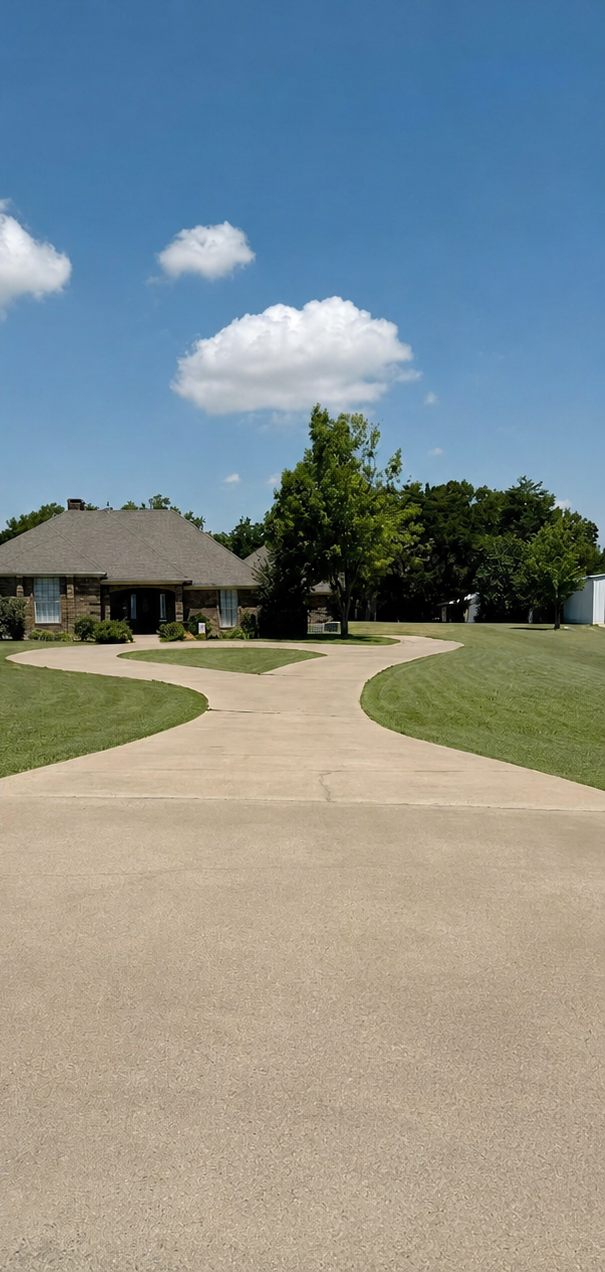
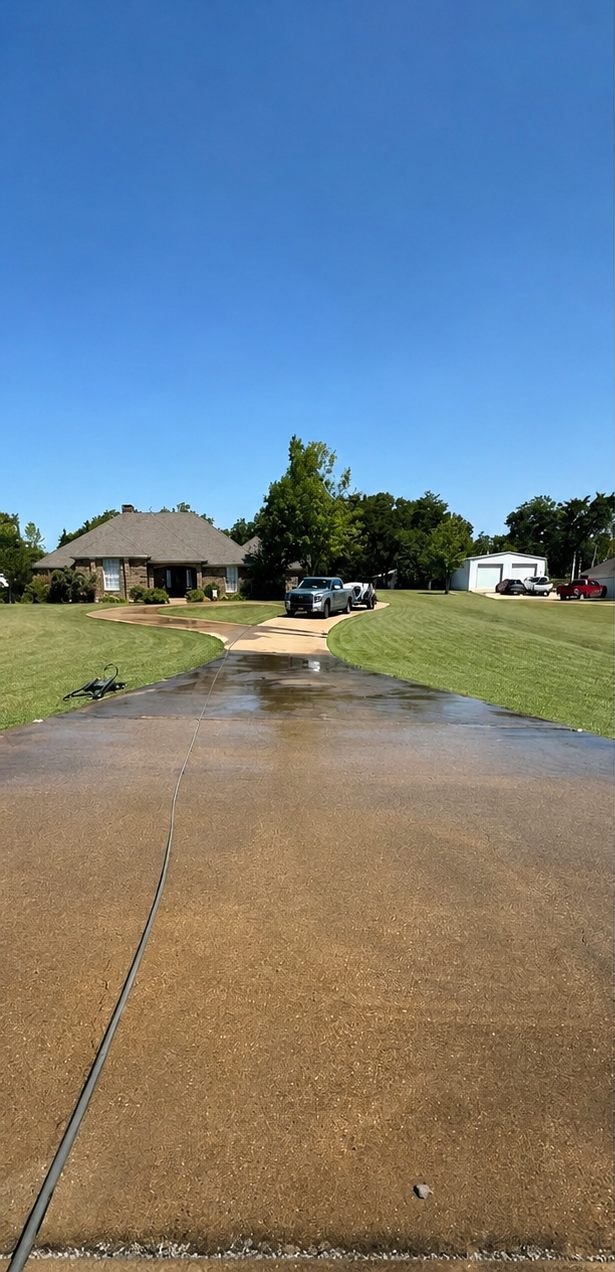
You wash your driveway, and within a few weeks the chalky white streaks are back — same haze, same ugly mineral lines running down toward the curb. If you live in Carrollton, Plano, Lewisville, Frisco, McKinney, or really anywhere in North DFW, you deal with this more than almost anyone in the country. The reason isn't bad luck, and it isn't your cleaning. It's the water coming out of your sprinklers — and what it leaves behind when the Texas sun bakes it dry.
Why North Texas Water Stains So Fast
It comes down to one stubborn fact: the water in North Texas is brutally hard. DFW's municipal supply typically runs between 15 and 25 grains per gallon — well above the 7 grains-per-gallon threshold that's officially labeled "very hard." If you've ever Googled your city's water quality report and seen that number, you already know the culprit. Here's why it wrecks your concrete and glass so quickly.
Hard water is full of dissolved calcium, magnesium, and lime. That's fine while it's liquid. The trouble starts when the water hits a hot surface and evaporates — the minerals don't evaporate with it. They get left behind as a white, chalky deposit, layer after layer. In a North Texas summer, a driveway in direct sun can hit 140°F or more. Sprinkler water on that slab doesn't sit and soak in. It evaporates in minutes, baking every speck of mineral straight into the surface before it ever has a chance to rinse away.
It's an even bigger deal than you'd think because of where our water comes from. Carrollton, Lewisville, Plano, and McKinney all draw from the same Trinity River / Elm Fork watershed, which is naturally high in dissolved minerals as it flows through the region's limestone and clay-heavy geology. Turn on a sprinkler system anywhere along that line and you're spraying that calcium-laden water across your driveway day after day. Every zone that hits concrete is, in effect, laying down a fresh coat of mineral stain.
Then add North Texas red clay to the mix. When storms kick up, that fine clay dust settles on driveways and the lower walls of your house. Mixed with hard water, it forms a tacky, baked-on film that clings to concrete pores and siding grain far worse than ordinary dirt. It's why the staining here doesn't just look like a white sheen — it can turn into a grimy rust-and-white crust that plain soapy water won't touch.
Where You'll See It First
Hard water staining doesn't show up uniformly. It concentrates where water lands, pools, and dries. Look for it in these spots around a typical North DFW home:
- Driveways. White haze across the slab, chalky circles exactly where sprinkler heads reach, and mineral rings where AC condensate drips onto the concrete all day.
- Windows. Cloudy spots that won't wipe off, "crusty" mineral edges where water pools along frames and sills, and those stubborn hard water spots that a normal glass cleaner makes worse.
- Siding. White streaks on north-facing walls — the shaded side where irrigation overspray dries slowly and leaves mineral trails running down the exterior.
- Pool decks & pavers. Calcium buildup packed into grout lines and a chalky film on paver surfaces, worst near the pool edge where splash and evaporation overlap.
- Gutters & fascia. Mineral runoff streaking down the fascia boards and the outer face of the gutter when overflow drips repeatedly over hard water.
Why Wiping or Scratching Doesn't Work
Every homeowner in hard-water country has tried the same handful of tricks. Vinegar. CLR. A baking soda paste. A magic eraser. Sometimes steel wool on glass when they're truly fed up. Here's the honest truth: none of them fix the problem, and most of them make it worse.
Vinegar and CLR are acids, and at the right dilution they do dissolve some calcium. But at the strength and dwell time a driveway or a bank of windows needs, they're either too weak to touch the amount of mineral buildup you've got, or too harsh for anything else. A magic eraser is a fine abrasive — which is exactly the problem. On glass, any abrasive creates micro-scratches, and those microscopic grooves become new homes for minerals the next time sprinkler water dries on the pane. You're quite literally making the future staining worse to chase today's spots.
For concrete, the DIY route is worse still. The go-to is a bottle of muriatic acid from the hardware store, hosed straight onto the driveway. Without careful neutralization — and most people don't neutralize at all — muriatic acid etches the surface of the concrete, roughening it and making it more porous. A rougher, more porous slab holds onto the next round of minerals even harder. It also runs off into your landscaping and kills plants, and it can eat away at the base of a brick border or the seam around a driveway expansion joint. That "quick fix" is how you end up with a stained, etched, patchy-stop driveway and a dead row of shrubs.
The Professional Two-Step Process
There's a reason the staining keeps coming back after a homeowner's best effort: scrub-and-rinse addresses the visible stain on the surface, not the mineral deposits left inside the concrete pores or the glass microstructure. Professionals attack it in two distinct phases.
Step 1 — Pre-treatment. Before pressure touches the surface, we apply a mild acidic cleaning solution. We use a citric-acid-based cleaner, not harsh muriatic acid. It's strong enough to dissolve the calcium, magnesium, and lime deposits that are bonded to the concrete, but controlled enough that it doesn't etch the surface or burn nearby grass and beds. The cleaner is applied at a tightly controlled dilution ratio and given the right dwell time to break the mineral bonds down before any rinsing happens.
Step 2 — Controlled pressure rinse. After the acid has done the dissolving, a pressure rinse flushes the now-dissolved minerals out of the concrete pores. This is where "controlled" matters. Too much pressure on pre-treated concrete can push mineral-laden water deeper into the pores instead of pulling it out, so the fan, angle, and distance are all deliberate — and we finish with a neutralizing rinse so nothing active is left sitting in your pores or on your lawn.
Windows get their own version of the same idea: a specialized hard water spot remover, worked at the right dwell time, followed by a water-fed pole rinse with pure water so no new mineral film is laid down as it dries. No abrasives, no etching glass, no micro-scratches.
The difference between what we do and what a homeowner (or an inexperienced crew with a pressure washer) does isn't louder equipment. It's controlled dilution ratios, proper dwell time, a neutralization rinse, and protection for your landscaping — the details that determine whether the minerals actually leave, or just hide long enough to come back in a few weeks.
Straight talk on value: a professional hard water treatment on a typical DFW driveway runs about $299 – $499 depending on square footage and buildup severity. That's more than the bottle of vinegar you already tried — but the vinegar that didn't work cost you the same $0 and left the stain in place. One treatment that removes the minerals from the surface and the pores beats a lifetime of cheap fixes that never stick.
Prevention After Removal
Once the white is gone, the goal is to keep it gone as long as possible. Hard water will always be in your sprinklers, so prevention is about reducing how much of it touches a hot, porous surface, and sealing what you can't keep dry:
- Adjust your sprinkler heads. Angle zones away from the driveway, walkways, and windows so water isn't hitting concrete and glass and baking on. This alone cuts most of the recurring staining at the source.
- Consider a water softener for irrigation. It's increasingly common in new construction around Frisco and Plano. If you're repiping or building, softening the irrigation line means no mineral content to bake onto the slab in the first place.
- Clean on a schedule — not after disaster. A semi-annual or annual professional treatment while buildup is light is far cheaper and faster than waiting until the chalk has penetrated the pores and set for a summer.
- Seal concrete driveways after cleaning. A good concrete sealer fills the pores and dramatically reduces how much mineral-laden water can soak in and leave deposits. Done right after a two-step treatment, it buys you 12-18 months of protection instead of weeks.
A Real DFW Scenario
Put it all together with a scenario we see constantly. Your Carrollton home's south-facing driveway catches sprinkler overspray from the north-side zone every morning before the sun gets high. All summer the concrete bakes. By August, you've got a six-foot chalky band running across the slab where that spray lands and dries.
You tried scrubbing it with vinegar. Honest effort, and it did look better — for about a week. Within a month the white was back, because the mineral deposits had penetrated the concrete pores, not just coated the surface. Scrubbing removed the top layer and faded the stain on the surface, but the dissolved minerals sitting inside the slab just wicked back up and re-deposited as the water evaporated again.
This time the mineral deposits get pulled out of the surface and the pores. The citric pre-treatment dissolves the calcium where it's hiding, the controlled rinse flushes it out, and a sealer closes off those pores so the next sprinkler cycle has nothing to soak into. You're not just buying a clean driveway — you're buying 12-18 months without the chalky band coming back to stare at you from the curb.
Hard water stains keep coming back because the root cause isn't addressed
We treat the surface and the mineral deposits — not just the visible stain. Free, itemized no-pressure estimates for homes and businesses across Carrollton, Plano, Frisco, and North DFW.
Call (214) 636-8577 Book Online We'll tell you exactly what's included before you book.We're a veteran-owned company based in Carrollton, and we clean homes and businesses across Plano, Frisco, Lewisville, McKinney, The Colony, Coppell, and the wider DFW Metroplex. Every season we treat driveways, windows, siding, and pool decks that were "cleaned" with pressure alone and came back stained within weeks — because pressure pushes dirt around, but only the two-step process actually removes the minerals.
Frequently Asked Questions
Why do hard water stains keep coming back on my driveway?
Because most cleaning only removes the stain on the surface while leaving mineral deposits inside the concrete pores. As water evaporates, those dissolved minerals wick back up and re-deposit. Regular high-pressure washing can make it worse by pushing mineral-laden water deeper into the slab. A two-step treatment — acidic pre-treatment plus a controlled neutralizing rinse — removes the deposits from the pores, which is why it actually lasts.
Can I remove hard water spots from windows without scratching them?
Yes, but skip the abrasives. Magic erasers, steel wool, and scouring pads create micro-scratches in glass that trap minerals and make future spotting worse. The right approach is a specialized hard water spot remover applied at the correct dwell time, then rinsed with pure water via a water-fed pole so no new mineral film dries onto the pane. That dissolves the deposits without scratching the glass.
Is muriatic acid safe to use on concrete?
Not for a homeowner working without neutralization, and not at the strength most people pour it on. Muriatic acid etches the concrete surface, leaving it rougher and more porous so it holds onto the next round of minerals even harder. It also runs off and can kill landscaping. Professionals use a mild citric-acid-based cleaner at controlled dilution, plus a neutralizing rinse, which dissolves the calcium without damaging the slab or the yard.
How often should I have hard water stains treated in North Texas?
For most DFW homes with sprinkler systems, a professional treatment every 12 to 18 months — ideally in spring before the summer heat bakes minerals on — keeps buildup light and easy to remove. If you seal the concrete after cleaning, you can often stretch that window toward the longer end. If your driveway's already visibly chalky, address it sooner than later so the deposits don't penetrate deeper and make the job harder.
Does a water softener prevent driveway staining?
Yes, if it's on the irrigation line. A whole-house softener that only feeds indoor plumbing won't touch your sprinklers — the water hitting your driveway is still hard. Homes built with softened outdoor lines in cities like Frisco and Plano see far less mineral buildup on concrete and windows. If retrofitting a softener isn't in the budget, adjusting sprinkler heads and sealing the driveway are your best moves instead.
Not sure if it's hard water or mold? Send us a photo and the city. We'll tell you what's on the surface and whether a two-step treatment is the fix. Call (214) 636-8577 or request a free estimate — we serve Carrollton, Plano, Frisco, Lewisville, McKinney, The Colony, Coppell, and the broader DFW Metroplex.